Neuromorphic computing represents a paradigm shift in the field of computer science and artificial intelligence, drawing inspiration from the intricate architecture and functionality of the human brain. Unlike traditional computing systems that rely on binary logic and linear processing, neuromorphic systems are designed to emulate the brain’s neural networks, enabling them to process information in a more efficient and adaptive manner. This approach not only enhances computational capabilities but also opens new avenues for developing intelligent systems that can learn, adapt, and respond to their environments in real-time.
The term “neuromorphic” was coined in the late 1980s by Carver Mead, a pioneer in the field of VLSI (Very Large Scale Integration) design. Mead’s vision was to create hardware that mimicked the brain’s structure and function, allowing for more efficient processing of sensory information. Today, neuromorphic computing encompasses a wide range of technologies, including specialized hardware, algorithms, and architectures that aim to replicate the brain’s ability to perform complex tasks with minimal energy consumption.
As we delve deeper into this fascinating field, it becomes evident that neuromorphic computing holds the potential to revolutionize not only artificial intelligence but also our understanding of cognition itself.
Key Takeaways
- Neuromorphic computing is a new approach to computer design that mimics the human brain’s neural structure and function.
- Neuromorphic chips are designed to process information in a way that is similar to the human brain, using spiking neural networks and event-driven processing.
- Brain-like AI refers to artificial intelligence systems that emulate human cognitive abilities, such as perception, learning, and decision-making.
- Spiking neural nets are a type of artificial neural network that models the activity of biological neurons, allowing for more efficient and realistic information processing.
- The advantages of neuromorphic computing include low power consumption, real-time processing, and the ability to process and analyze large amounts of data in parallel.
Neuromorphic Chips: Mimicking the Human Brain
Neuromorphic chips are at the forefront of this technological revolution, designed to replicate the way neurons communicate and process information. These chips utilize a network of artificial neurons and synapses that can fire and transmit signals in a manner analogous to biological neural networks. One of the most notable examples is IBM’s TrueNorth chip, which features over a million programmable neurons and 256 million synapses.
This architecture allows for parallel processing of information, enabling the chip to perform complex tasks such as image recognition and sensory processing with remarkable efficiency. The design of neuromorphic chips often incorporates event-driven processing, where neurons only activate in response to specific stimuli, much like their biological counterparts. This contrasts sharply with conventional processors that operate on a clock cycle, leading to significant energy savings.
For instance, TrueNorth consumes less than 70 milliwatts of power while executing tasks that would require several watts on traditional hardware. This energy efficiency is crucial for applications in mobile devices and IoT (Internet of Things) systems, where power consumption is a critical concern. As researchers continue to innovate in this space, we can expect neuromorphic chips to become increasingly sophisticated, paving the way for more advanced AI applications.
Brain-Like AI: Emulating Human Cognitive Abilities
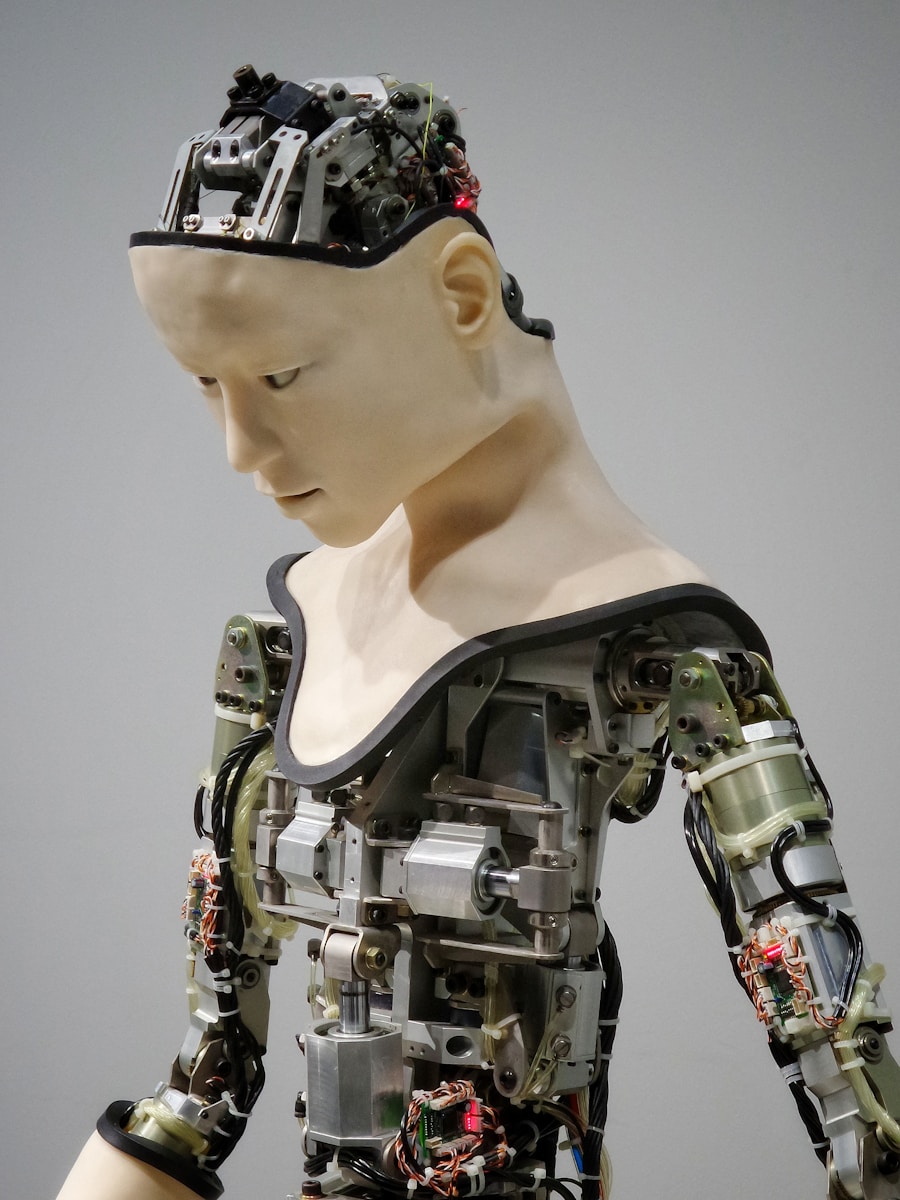
The ultimate goal of neuromorphic computing is to create brain-like AI systems capable of emulating human cognitive abilities such as perception, reasoning, and decision-making. Traditional AI models often rely on deep learning techniques that require vast amounts of labeled data and extensive computational resources. In contrast, brain-like AI systems leverage the principles of neuromorphic computing to learn from unstructured data and adapt to new situations with minimal supervision.
One promising approach within this domain is the development of unsupervised learning algorithms that mimic the brain’s ability to learn from experience. For example, researchers have explored techniques such as Hebbian learning, which is based on the principle that “cells that fire together wire together.” This concept allows artificial neural networks to strengthen connections between neurons based on their co-activation, facilitating more efficient learning processes. By emulating these biological learning mechanisms, neuromorphic systems can potentially achieve higher levels of intelligence and adaptability than traditional AI models.
Spiking Neural Nets: Modeling Neural Activity
At the heart of neuromorphic computing lies the concept of spiking neural networks (SNNs), which model the dynamic behavior of biological neurons more accurately than conventional artificial neural networks (ANNs). In SNNs, information is transmitted through discrete spikes or action potentials rather than continuous values. This event-driven approach allows for a more realistic representation of neural activity, capturing the temporal aspects of information processing that are crucial for understanding cognition.
SNNs operate on principles derived from neuroscience, such as the Leaky Integrate-and-Fire model, which simulates how neurons accumulate input signals over time until they reach a threshold and emit a spike. This mechanism not only enhances the efficiency of information processing but also enables SNNs to encode temporal patterns in data, making them particularly well-suited for tasks involving time-series analysis or sensory data interpretation. For instance, researchers have successfully applied SNNs to tasks such as speech recognition and visual processing, demonstrating their potential to outperform traditional models in specific applications.
Advantages of Neuromorphic Computing
The advantages of neuromorphic computing are manifold, particularly when it comes to energy efficiency and real-time processing capabilities. One of the most significant benefits is its ability to perform complex computations with minimal power consumption. Traditional computing architectures often struggle with energy efficiency as they scale up in complexity; however, neuromorphic systems can handle large amounts of data while maintaining low power usage due to their event-driven nature.
Moreover, neuromorphic computing excels in handling unstructured data and adapting to new environments. Unlike conventional AI systems that require extensive training on labeled datasets, neuromorphic systems can learn from raw sensory inputs in real-time. This adaptability makes them particularly suitable for applications in robotics and autonomous systems, where the ability to respond dynamically to changing conditions is paramount.
Additionally, the parallel processing capabilities inherent in neuromorphic architectures allow for faster decision-making processes, which is critical in time-sensitive applications such as autonomous driving or real-time surveillance.
Applications of Neuromorphic Computing
The applications of neuromorphic computing are diverse and span various fields, including robotics, healthcare, and environmental monitoring. In robotics, neuromorphic systems can enhance perception and decision-making capabilities by enabling robots to process sensory information more efficiently. For example, researchers have developed robotic systems equipped with neuromorphic vision sensors that can detect and classify objects in real-time while consuming significantly less power than traditional vision systems.
In healthcare, neuromorphic computing holds promise for advancing medical diagnostics and personalized treatment plans. By leveraging spiking neural networks to analyze patient data, healthcare providers can identify patterns indicative of specific conditions or predict patient outcomes with greater accuracy. Furthermore, neuromorphic systems can be integrated into wearable devices that monitor vital signs and provide real-time feedback to users, promoting proactive health management.
Environmental monitoring is another area where neuromorphic computing can make a substantial impact. With the ability to process vast amounts of data from sensors deployed in natural ecosystems, these systems can help track changes in environmental conditions and detect anomalies indicative of climate change or ecological disturbances. By providing timely insights into environmental trends, neuromorphic computing can support conservation efforts and inform policy decisions aimed at protecting our planet.
Challenges and Limitations of Neuromorphic Computing
Despite its promising potential, neuromorphic computing faces several challenges and limitations that must be addressed for widespread adoption. One significant hurdle is the complexity involved in designing and programming neuromorphic systems. Unlike traditional computing architectures that rely on well-established programming languages and frameworks, neuromorphic systems often require specialized knowledge in both neuroscience and computer science.
This steep learning curve can hinder the development of applications and limit accessibility for researchers and developers. Additionally, while neuromorphic chips offer remarkable energy efficiency, they may not yet match the raw computational power of conventional processors for certain tasks. For instance, deep learning models trained on large datasets may still outperform neuromorphic systems in specific applications requiring extensive training on labeled data.
As a result, researchers must continue exploring hybrid approaches that combine the strengths of both traditional AI methods and neuromorphic architectures to achieve optimal performance across various domains.
The Future of Neuromorphic Computing
Looking ahead, the future of neuromorphic computing appears bright as researchers continue to innovate and refine these technologies. Ongoing advancements in materials science and fabrication techniques are likely to lead to more powerful and efficient neuromorphic chips capable of supporting increasingly complex applications. For instance, developments in memristor technology—devices that mimic synaptic behavior—could enable more compact and energy-efficient hardware designs that further enhance the capabilities of neuromorphic systems.
Moreover, as our understanding of brain function deepens through neuroscience research, we can expect new insights that will inform the design of even more sophisticated neuromorphic architectures. This convergence of neuroscience and computer science has the potential to unlock new frontiers in artificial intelligence, leading to systems that not only mimic human cognition but also exhibit emergent behaviors akin to those found in biological organisms. As we stand on the cusp of this technological revolution, it is essential for researchers, policymakers, and industry leaders to collaborate in addressing the challenges associated with neuromorphic computing while harnessing its transformative potential.
By fostering an interdisciplinary approach that bridges neuroscience, engineering, and computer science, we can pave the way for a future where intelligent systems enhance our lives in ways we have yet to imagine.